How to Monetize a Web App You Built Without Code
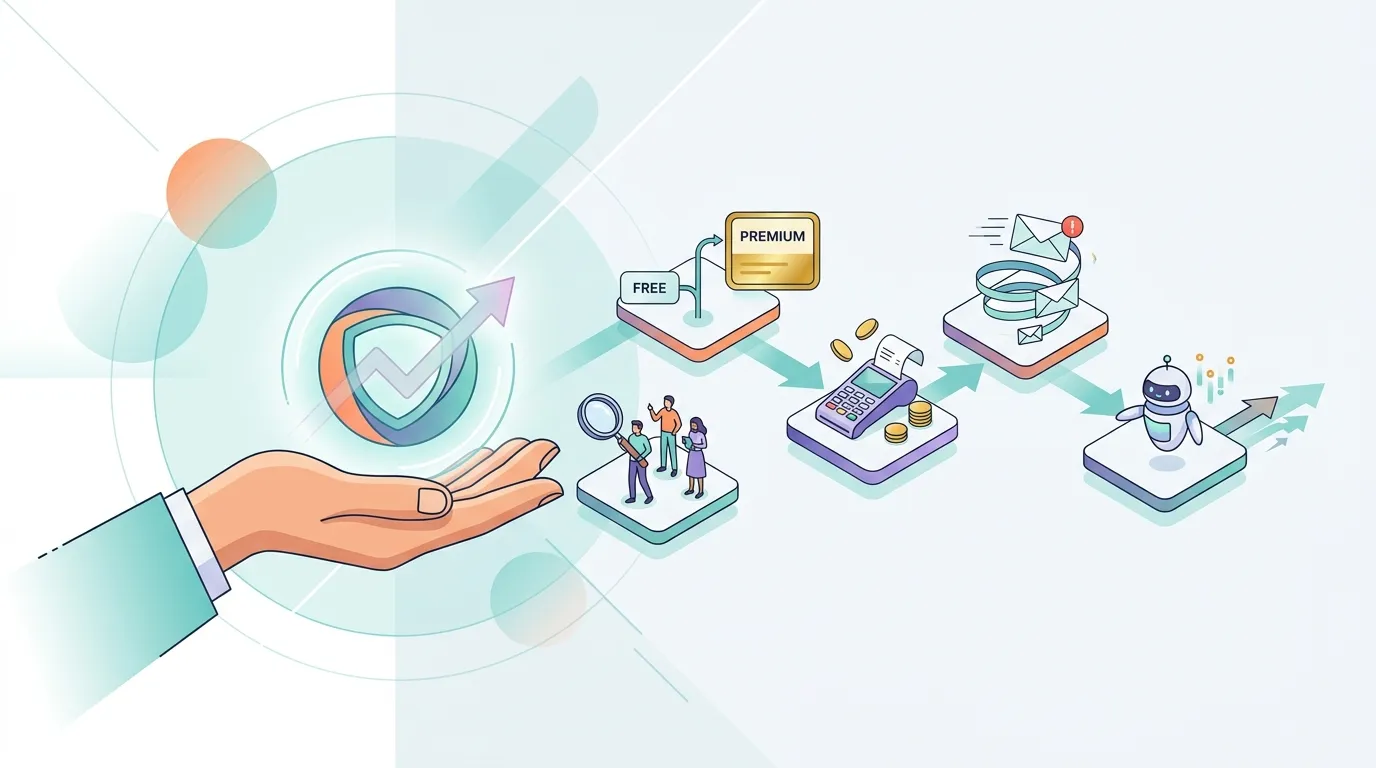
You built a working web app without writing a single line of code. Now the question keeping you up at night is: how do I actually make money from this? This guide walks you through every step of learning how to monetize a web app — from choosing the right pricing model to activating checkout, running email campaigns, and adding AI-powered premium features that justify a higher price.
What Are the Most Effective Ways to Monetize a Web App?
The most effective ways to monetize a web app are subscriptions, one-time payments, freemium upgrades, usage-based billing, and advertising. Subscriptions generate predictable monthly recurring revenue (MRR) and suit tools users open daily. One-time payments work for utilities with clear standalone value. Freemium builds an audience fast, then converts a slice of free users to paid. Usage-based billing aligns cost with value and is ideal for AI-feature-heavy apps. Advertising is viable only at significant traffic volume — typically 50,000+ monthly visits — and damages UX if overused.
Rule of thumb: choose the model that removes friction for your best user, not your cheapest user. Optimizing for the wrong segment caps your revenue early.
The Build → Launch → Earn Path for Non-Technical Founders
AI app builders have collapsed the time between idea and deployed product from months to hours. But shipping fast means nothing if you haven't mapped the revenue path before you launch.
A practical three-stage framework:
- Build — Describe your app in natural language; let the AI generate and deploy it automatically.
- Launch — Put it in front of real users on a real URL immediately. Don't wait for "version 2."
- Earn — Activate a payment layer while you still have early-adopter momentum.
The biggest mistake no-code founders make is treating monetization as a phase-two problem. By the time you revisit it, your early users have formed a habit of using the app for free, and breaking that habit is much harder than never forming it.
How Do I Choose Between a Subscription Model and a One-Time Payment?
If your app delivers ongoing, recurring value — use a subscription. If it solves a discrete problem once — use a one-time payment. The clearest signal is usage frequency: if a user would open your app at least once a week, subscription pricing captures that recurring value. If they'd use it once or twice ever (a PDF converter, a wedding seating chart generator), a one-time charge is more honest and converts better.
A secondary factor is your cost structure. If your app calls external APIs — especially LLMs — on every use, a one-time price creates a financial mismatch: the user pays once but generates costs indefinitely. Subscriptions or usage-based models fix that mismatch.
Subscription vs. One-Time Payment: Quick Comparison
| Factor | Subscription | One-Time Payment |
|---|---|---|
| Revenue predictability | High (MRR) | Low (lumpy) |
| Best for | Daily/weekly tools | Infrequent-use utilities |
| Churn risk | Yes — must retain | N/A after purchase |
| LTV potential | High | Capped at sale price |
| Conversion friction | Higher (commitment) | Lower (clear exchange) |
| API cost alignment | Good | Poor for LLM-heavy apps |
Activating Checkout: The Fastest Route from "Free" to "Paid"
The technical setup of a payment system has historically been the biggest obstacle for non-technical founders — integrating a payment processor, handling webhooks, managing failed charges, and gating features behind a paywall all require real engineering effort.
FloopFloop includes a built-in checkout and billing flow directly in the platform. That means your generated app can start accepting payments without you configuring a payment processor from scratch. The billing layer is already wired into the app's infrastructure — you describe what you want to charge and how, and the platform handles the implementation.
This matters for one concrete reason: speed of experiment. The faster you can put a pricing page in front of real users, the faster you learn whether your price point is right. Don't spend three weeks building a checkout flow before you've validated that anyone will pay at all.
What Is Freemium and How Does It Work for Web Apps?
Freemium is a pricing model where a core version of your app is permanently free, and advanced features are locked behind a paid tier. The goal is to build a large top-of-funnel audience at zero acquisition cost, then convert 2–5% of those free users to paid. That conversion rate sounds low, but at scale it produces significant revenue: 10,000 free users at a 3% conversion rate and a $12/month plan yields $3,600 MRR.
Freemium works best when:
- The free tier is genuinely useful (users form a habit)
- The paid tier solves a pain the free tier creates (e.g., usage limits, missing features)
- The upgrade path is visible from inside the app
The most common freemium failure mode is a free tier that's too generous — users never hit a reason to upgrade.
How Email Templates and Newsletters Convert Free Users to Paid
Traffic without a follow-up mechanism is revenue left on the table. Email is still the highest-ROI conversion channel for web apps, with average open rates around 35–45% for SaaS products compared to under 2% organic social reach.
A three-email sequence that works:
- Welcome email — sent immediately on signup. Confirm the account, surface the single most valuable feature, set expectations.
- Nurture email — sent on day 3 or 7. Share a use case, a success story, or a tip that makes the app more valuable. Build habit.
- Upgrade email — sent when the user hits a free-tier limit or after 14 days of activity. Highlight exactly what they'd unlock and why it matters to them specifically.
FloopFloop includes email templates and a newsletter tool you can use to run these sequences without connecting a third-party ESP during your initial launch phase. This keeps the stack lean while you're still validating price and message.
Adding AI-Powered Features as a Premium Upsell
One of the most effective upsell strategies available right now is adding AI-powered features to a higher-priced tier. Users have strong intuitions about AI being "more" — more sophisticated, more valuable, worth more money.
FloopFloop's built-in AI Gateway lets your generated apps call LLMs (with model routing, rate limiting, and credit management) without you managing API keys or worrying about cost overruns. That infrastructure makes it practical to offer an AI-enhanced tier at a higher price point, because the platform handles the complexity of routing requests and tracking usage.
Concrete upsell examples by app type:
- Content tool → free tier generates outlines; paid tier generates full drafts using an LLM
- Data dashboard → free tier shows charts; paid tier adds AI-generated natural-language summaries
- Customer support tool → free tier shows FAQs; paid tier adds an AI chat assistant
The secret to AI upsells is specificity: tell users exactly what the AI does for them, not just that the feature "uses AI."
Can I Monetize a Free Web App with Ads?
Yes, but with significant caveats. Display advertising (via networks like Google AdSense) only becomes meaningful revenue above roughly 50,000 monthly page views — below that, CPMs are too low to justify the UX degradation. If your app is in an early growth phase, ads will earn pennies while training your users to expect a cluttered, ad-supported product, which makes a future paid upgrade harder to sell.
A better bridge strategy: use a free, ad-supported tier as a third option below your freemium tier — essentially a "free with ads" plan that gives users a clear reason to upgrade to ad-free.
How Much Money Can You Make from a Web App?
Solo-founder web apps generating $1,000–$10,000 MRR within 12 months are well-documented and realistic. Apps solving a specific professional pain point in a niche with clear willingness to pay can reach $500 MRR in 60–90 days with active distribution. Breakout products — usually those that replace a painful workflow or an expensive legacy tool — can reach six figures in annual recurring revenue within 18 months.
The variables that matter most:
- Niche specificity — tighter audience, higher willingness to pay
- Problem severity — the more painful the problem, the less price-sensitive the buyer
- Distribution — a great product with no distribution earns nothing
- Pricing confidence — most founders underprice by 30–50% on their first attempt
When Should I Start Monetizing My Web App?
Start monetizing before you feel ready — ideally at launch, or at the first sign of repeat usage. The psychological barrier most founders hit is "the app isn't good enough yet." But willingness to pay is the most reliable signal of product-market fit. If nobody will pay even a small amount, the problem is more likely positioning or audience than feature completeness.
A practical trigger: if five unrelated users have returned to your app more than once in the same week, you have enough signal to put up a paid tier.
A Realistic Revenue Roadmap: Free Tier to Recurring Subscribers
Here's a concrete four-step path from zero to recurring revenue:
- Week 1–2: Launch with a free tier. Get 50–100 real users. Watch what they actually do, not what they say they'd pay.
- Week 3–4: Introduce a paid tier. Gate one high-value feature or raise a usage limit. Price it higher than feels comfortable — you can always negotiate down.
- Month 2: Activate email sequences. Welcome → nurture → upgrade. Even a 5% free-to-paid conversion on 200 users at $10/month = $100 MRR.
- Month 3+: Add an AI-powered premium tier. Use the leverage of AI features to justify a 3–5× price increase on your highest tier. Focus retention here — churn kills MRR faster than acquisition can fix it.
Wrapping Up
Learning how to monetize a web app isn't a single decision — it's a sequence of smaller bets: picking a model, activating a payment layer, running email sequences, and adding premium features that justify higher prices over time. The no-code era removes the technical excuses. Your job is to ship, charge, listen, and iterate. FloopFloop gives you the checkout, email, AI Gateway, and hosting infrastructure to run that loop without assembling a stack — so your energy goes into growth, not DevOps.
Frequently asked questions
What are the most effective ways to monetize a web app?
The most effective monetization models for web apps are subscriptions (best for daily-use tools), one-time payments (best for discrete-use utilities), freemium with paid upgrades, usage-based billing (ideal for AI-feature-heavy apps), and advertising (viable only at 50,000+ monthly visits). Subscriptions typically produce the highest lifetime value and most predictable revenue.
How do I choose between a subscription model and a one-time payment for my web app?
Use a subscription if your app delivers recurring value and users would open it at least weekly. Use a one-time payment if the app solves a discrete problem users encounter rarely. Also consider your cost structure: if your app calls LLMs or external APIs on every use, a one-time charge creates a financial mismatch that subscriptions or usage-based pricing solve.
Can I monetize a free web app with ads?
Yes, but advertising only generates meaningful revenue above roughly 50,000 monthly page views. Below that threshold, ad CPMs are too low to justify the UX trade-off. A more effective strategy for early-stage apps is using freemium — a free tier that converts to paid — before considering ads as a secondary or lower-tier option.
What is freemium and how does it work for web apps?
Freemium means offering a permanently free core version of your app while locking advanced features behind a paid tier. The goal is to build a large free user base and convert 2–5% to paid. It works best when the free tier is genuinely useful enough to form a habit, and the paid tier solves a limitation the free tier creates — like usage caps or missing power features.
How much money can you make from a web app?
Solo-founder web apps reaching $1,000–$10,000 MRR within 12 months are realistic and well-documented. Apps targeting a specific professional pain point in a niche with clear willingness to pay can hit $500 MRR in 60–90 days with active distribution. The biggest variable is pricing confidence — most first-time founders underprice by 30–50%.
When should I start monetizing my web app?
Start monetizing at launch, or at the first sign of repeat usage. Waiting until the app feels 'complete' is the most common and costly mistake. Willingness to pay is your best product-market fit signal. A practical trigger: if five unrelated users return to your app more than once in the same week, you have enough signal to introduce a paid tier.
Subscribe to the FloopFloop newsletter
New posts, product updates, and the occasional lesson — straight to your inbox.
We'll never share your email. Unsubscribe anytime.
Related articles

How One User Built a Group Voting App Without Writing Code
Learn how VoteStay.com was built in days using natural language—a group voting app that lets friends democratically choose vacation rentals without touching a line of code.

How to Add an AI Chatbot to Your Web App Without Managing API Keys
Learn how to add an AI chatbot to your web app in minutes — covering model routing, rate limits, and API key security — without writing a single line of backend boilerplate.
Build a SaaS Landing Page with Checkout Using AI Prompts
Learn how to build a SaaS landing page with checkout flow using plain-language AI prompts — no coding required, from hero section to first paid signup.