10 Profitable Websites You Can Build with FloopFloop Today
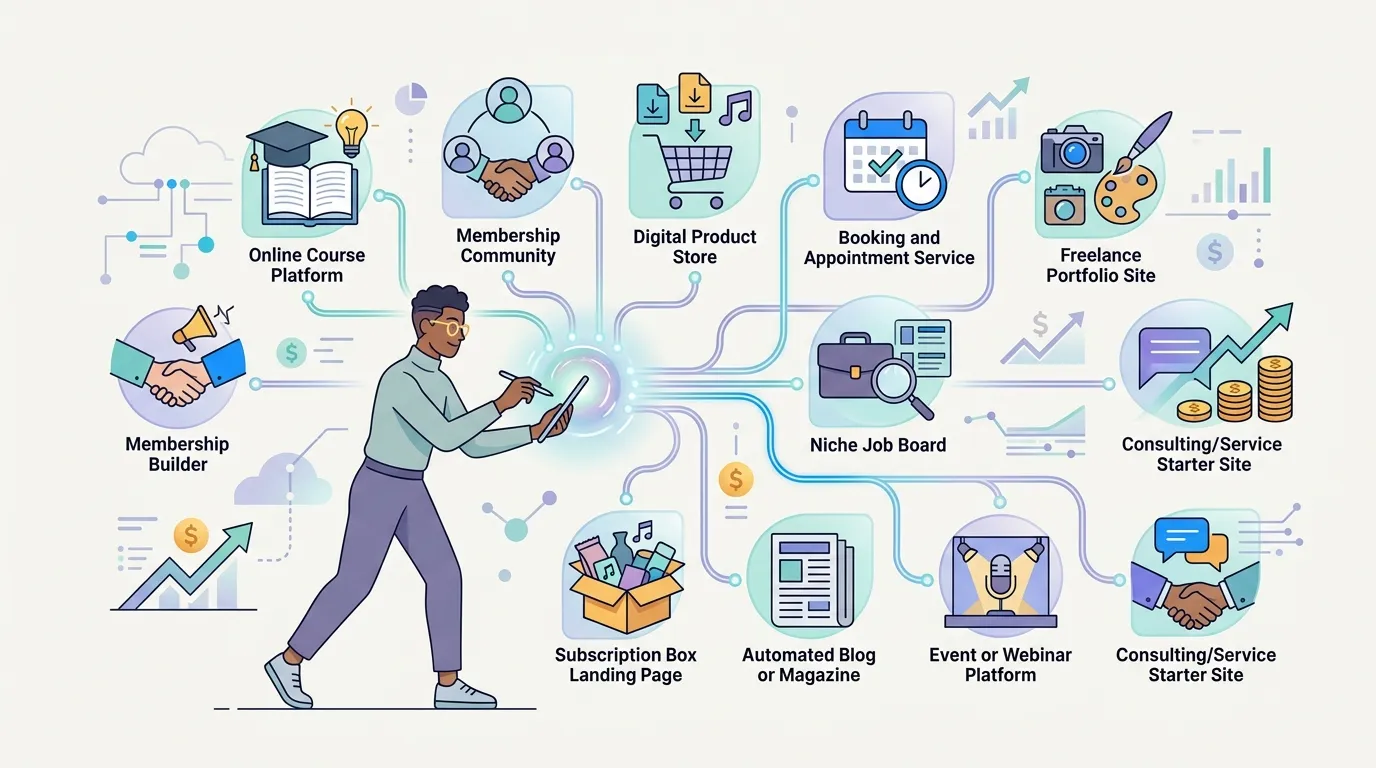
The Opportunity: Building Profitable Sites Faster Than Ever
The barrier to launching a revenue-generating website has never been lower. With AI-powered builders, you no longer need to hire developers, manage servers, or spend weeks on infrastructure. The real bottleneck today isn't technical—it's identifying the right idea and validating demand. This guide walks you through ten proven website concepts you can launch with FloopFloop, each with clear monetization paths and real earning potential.
1. AI Tool Directory & Review Platform
As AI tools explode in number, buyers are desperate for curated, honest comparisons. Build a directory where users discover tools filtered by category, price, and use case—then review each one.
Monetization:
- Affiliate commissions when users sign up via your links (SaaS tools pay 20–40% recurring commissions)
- Sponsored listings for premium tool creators
- Freemium tier with paid "verified review" badges
Why it works: Low content cost, high affiliate payouts, and evergreen search traffic. Tools like Zapier and N8N actively recruit affiliates.
2. No-Code Template Marketplace
No-code builders are mainstream, but templates save users weeks of setup. Create a Gumroad or SendOwl-style marketplace where builders sell Webflow, Bubble, or FloopFloop templates.
Monetization:
- 30% platform fee on each template sale
- Subscription tier for template creators (unlimited uploads)
- Premium templates bundled as "starter packs"
Why it works: Recurring seller fees + high margins. Template creators often earn $500–$5,000 per month per successful template.
3. Niche Comparison Tracker (SaaS, Insurance, VPN)
Build an always-updated comparison table for a specific vertical: project management tools, web hosting providers, email marketing platforms, or VPN services. Auto-scrape pricing and features; add human reviews.
Monetization:
- Affiliate commissions (typically 15–30%)
- Featured/sponsored rows for vendors
- Export reports (PDF pricing guides) behind a lead-gen form
Why it works: People search "X vs Y" constantly. You intercept high-intent traffic at the comparison stage, right before purchase decisions.
Comparison content has 3–5x higher affiliate conversion rates than general reviews because visitors are already evaluating options.
4. Digital Asset Marketplace (Fonts, Icons, Templates)
Creators sell fonts, icon packs, Figma components, and design templates on Etsy or Gumroad—but a dedicated marketplace with designer discovery, ratings, and collections feels premium.
Monetization:
- 25–40% commission per sale
- Subscription tier for sellers (featured placement, analytics)
- Bundles and collections (you curate and earn)
Why it works: Design assets are high-margin digital products. Designers actively seek distribution channels beyond Gumroad.
5. Creator Monetization Hub (Course Hosting + Memberships)
Coach creators (designers, developers, marketers) host courses, video libraries, or membership content on your platform. Built-in payment processing, drip-feed scheduling, and audience management.
Monetization:
- 10–20% processing fee per transaction
- Premium tier: analytics, email integrations, custom branding ($29–$99/mo)
- Bundle/cross-promotion from other creators
Why it works: Creators hate Teachable's $29–$249/mo fee. A 10% commission model attracts migration. With 20 creators earning $2,000/mo each, you're at $4,000 revenue.
6. Vertical Job Board (Remote Dev Jobs, Design Gigs, etc.)
Job boards for specific niches (remote developers, freelance designers, crypto roles) charge employers to post. Build a simple, fast-loading job board with email notifications and RSS feeds.
Monetization:
- $299–$499 per job posting (5–30 day listing)
- Monthly featured employer tier ($99/mo for unlimited posts)
- Sourced placement fees if you match candidates
Why it works: Employers pay because they reach a pre-filtered audience. A board with 50 active job posts at $299 each = $14,950 monthly revenue.
7. Subscription Box Curator or Reviewer
Monitor, compare, and review subscription boxes (coffee, wellness, gadgets, books). Include unboxing photos, member pricing analysis, and a comparison table.
Monetization:
- Affiliate links (20–40% commission per signup)
- Sponsored content from box creators
- Exclusive discount codes (you take 10% of sales)
- Premium tier: early reviews, subscriber-only discounts
Why it works: Subscription boxes have huge affiliate budgets. People research before subscribing, making you the top-of-funnel gatekeeper.
8. Lead Generation Site (Home Improvement, Legal, Health)
Create a content hub (guides, checklists, calculators) for a high-value niche like roofing repair, tax law, or emergency dentistry. Capture leads via forms and sell them to service providers.
Monetization:
- $25–$100+ per qualified lead (dental, legal, home services pay premium rates)
- Subscription tier for service providers ($299–$999/mo for lead access)
- Sponsored content from vendors
Why it works: Service providers have huge customer acquisition costs. If you generate 20 leads/month at $50 each = $1,000/mo, plus subscription tier providers paying $500/mo.
9. Educational Micro-Credential Platform
Offer short, skill-based certificates in high-demand areas (ChatGPT prompt engineering, no-code automation, AI copywriting). Users pay per course; employers verify certificates.
Monetization:
- $49–$149 per course completion
- Corporate bulk licenses ($2,000–$10,000/year)
- Certificate verification API (employers pay per check)
- Premium instructor tier ($299/mo to host courses)
Why it works: Certificates for in-demand skills are high-margin digital products. Employers pay to verify, creating a B2B revenue stream.
10. Affiliate-Powered Recommendation Engine
Build a recommendation site for a hobby/lifestyle category: best coffee grinders, budget earbuds, hiking backpacks, or freelance writing tools. Use affiliate links, AI-generated comparisons, and user ratings.
Monetization:
- Affiliate commissions (10–40% depending on product)
- Sponsored product placements
- Ad network (Mediavine, AdThrive: $25–$100 per 1,000 views)
- Premium tier: ad-free, exclusive buying guides
Why it works: Evergreen search traffic ("best X for Y") with high intent. A site earning 50,000 monthly organic views × 2% affiliate conversion × $50 average order = $50,000+ annual revenue.
Getting These Ideas Live in Hours
All ten concepts above share a common implementation path:
- Describe your idea in plain language to FloopFloop
- AI generates the code: full Next.js stack, database schema, payment flow
- Deploys instantly: live on a subdomain, SSL included, no DevOps required
- Iterate in real time: update features, tweak design, add payment processing—all deployed instantly
- Attach a custom domain when ready to scale
With automatic hosting, you skip the weeks usually spent configuring servers, databases, and CI/CD pipelines. You launch in days, not months.
Built-in tools like email templates, content management, and the AI Gateway (for LLM calls) mean you're not cobbling together 12 third-party services. That focus lets you validate the business model fast.
Common Revenue Stacks That Work
Most profitable sites combine multiple monetization streams:
- Affiliate + Ads: Comparison site earns 60% affiliate, 40% ads
- SaaS + Affiliate: Tool directory hosts affiliate links but also operates premium directory listings
- Freemium + Premium: Creator hub offers free course hosting, charges for analytics and branding
- Lead Gen + Sponsorships: Health guide site sells leads to clinics and doctors, sponsors from supplement brands
Diversified revenue is more stable and grows faster than single-stream models.
Launch Strategy: Validation Before Scale
Before pouring traffic or ads into any idea, validate with a small audience:
- Build the MVP in 1–2 hours using FloopFloop
- Recruit 20–50 beta users (communities, Twitter, Reddit)
- Measure: signup rate, time-on-site, return visits, affiliate clicks
- If metrics are weak, pivot the content/UX, not the entire idea
- Once validated, invest in SEO and ads
This cycle takes 2–3 days, not 3 months. Faster validation = faster revenue.
Scaling Beyond Launch
Once your site gains traction (1,000+ monthly users, proven monetization), growth levers include:
- Content expansion: hire writers, scale SEO efforts
- Paid traffic: Google Ads, affiliate networks, sponsorships
- Email lists: newsletter, retargeting, upsells
- Partnerships: white-label or licensing your platform
- Automation: AI-generated content, automated outreach
All of these scale independently from your hosting infrastructure because FloopFloop handles that transparently.
Wrapping Up
The ten website ideas above aren't speculation—each has proven demand, clear monetization, and low barriers to execution. The constraint today isn't technology; it's speed to market and capital efficiency. FloopFloop removes the technical friction so you can focus on the business: finding customers, validating value, and iterating. Pick one idea, launch it in 1 hour, and start learning what your market actually wants. Revenue follows clarity.
Frequently asked questions
How long does it take to launch a money-making website with FloopFloop?
A complete MVP (design, payment processing, core features) typically takes 1–2 hours of AI generation and tweaking. Launch to your subdomain happens instantly. If you provide clear requirements, you can be live and accepting payments within 2 hours.
Which of these 10 ideas requires the least maintenance?
Affiliate-powered recommendation engines and comparison trackers require the least ongoing work once content is established. They rely on evergreen search traffic and passive affiliate commissions. You're not managing users, courses, or service provider relationships.
Can I attach my own domain to a FloopFloop site?
Yes. FloopFloop handles DNS validation and SSL automatically. Your site launches on a free subdomain, and you can attach a custom domain whenever you're ready. The platform manages the technical setup—no manual certificate or DNS record configuration required.
What if my idea doesn't gain traction?
Because you built and launched in 1–2 hours, you can pivot quickly. Test a different angle, audience, or monetization model without sunk costs. The low creation overhead means you can run 3–4 validated experiments per month instead of one per quarter.
Subscribe to the FloopFloop newsletter
New posts, product updates, and the occasional lesson — straight to your inbox.
We'll never share your email. Unsubscribe anytime.
Related articles

Earn Passive Income Online: Launch Projects on FloopFloop
Learn how to build and monetize web applications without coding, turning your ideas into revenue streams with AI-powered deployment and minimal operational overhead.

Create Custom AI Assistants with FloopFloop: Step-by-Step Guide
Learn how to build and deploy your own AI assistants in minutes using FloopFloop's AI-powered web app builder, from concept to live agent.

Build Web Games with AI: FloopFloop's No-Code Approach
Discover how to develop interactive web games without writing code, using AI-powered generation and instant deployment on modern infrastructure.