Earn Passive Income Online: Launch Projects on FloopFloop
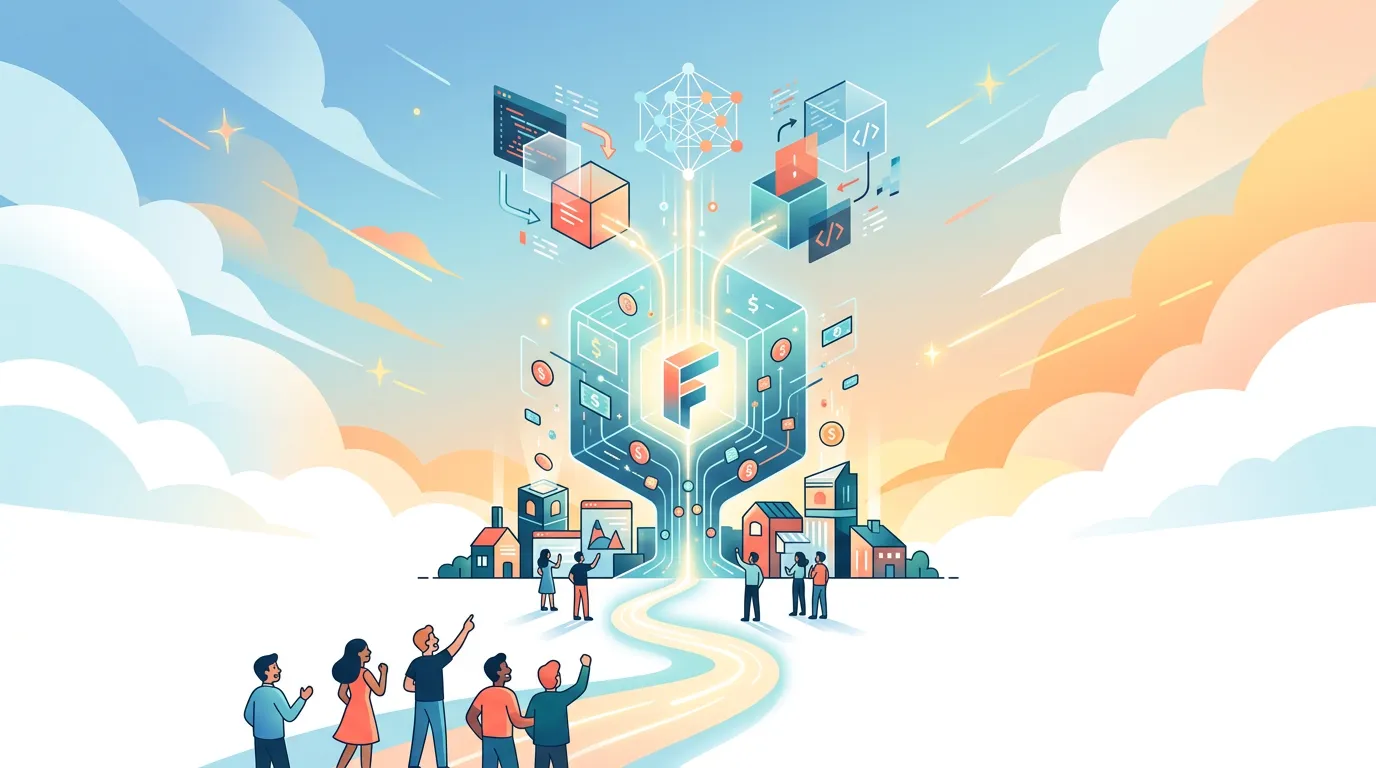
The Case for Building and Monetizing Web Projects Fast
Turning ideas into passive income typically requires months of development, ongoing maintenance, and deep technical expertise. But the internet has changed. AI-powered code generation now lets you launch monetizable web projects in hours, not months—drastically lowering both your time-to-revenue and the operational burden of keeping them running.
This guide shows you how to identify revenue-generating project ideas, build them with modern AI tools, and structure them for sustainable passive income.
Identifying High-Potential Passive Income Ideas
Not every web project will generate passive income. The best candidates solve a specific problem or serve a defined audience, and they either attract recurring traffic or lock in long-term customer relationships.
Types of Ideas That Generate Passive Income
Audience-first projects attract organic traffic through SEO, community, or brand reputation:
- Niche blogs or content hubs (e.g., productivity tips for remote workers, gardening guides)
- Comparison tools or calculators (mortgage calculators, savings trackers)
- Directories or databases (job boards filtered by industry, curated tool lists)
- Educational content platforms (course landing pages, certification checkers)
Transactional projects directly facilitate revenue:
- Digital product stores (templates, graphics, code snippets)
- SaaS landing pages with built-in checkout and billing
- Affiliate recommendation sites (link out to Amazon, B2B tools, etc.)
- Lead-generation funnels (capture qualified prospects, sell to businesses)
Utility-first projects drive monetization through repeat use:
- API wrappers or chatbot interfaces (e.g., ChatGPT frontend for a niche use case)
- Real-time dashboards (stock data, sports scores, crypto prices)
- Scheduling or booking tools that charge per appointment
- Automation platforms (email templates, social media scheduling)
The most scalable passive-income projects combine low operational overhead with recurring user engagement. A blog with affiliate links scales with SEO; a subscription tool scales with your code and infrastructure maturity, not your time.
Validating Before You Build
Before investing hours, validate that someone will use—and pay for—your idea:
- Search for existing competitors on Google; if nothing exists, demand may be low
- Spend $100–$500 on ads to drive test traffic to a simple landing page
- Ask 10 people in your target audience if they'd pay; >50% yes = green light
- Analyze search volume for your core keyword (Google Keyword Planner, Ahrefs)
Building Your First Project with AI Codegen
Once you have a validated idea, AI code generation collapses the build phase from weeks to hours.
The AI-First Workflow
Describe your project in natural language—what it does, who uses it, which pages it needs. Modern codegen engines transform that description into a production-ready web application (Next.js + TypeScript, for example) that's instantly deployed and live.
You don't write SQL, configure servers, or manage deployment pipelines. The app is automatically hosted on a free subdomain (e.g., myapp.floop.tech) and served globally via a CDN. If you own a custom domain, the platform handles DNS and SSL automatically.
Key Capabilities That Speed You Up
Built-in AI Gateway: Your generated app can call LLMs (OpenAI, Anthropic, etc.) without you managing API keys or rate limits. The platform handles routing and credit management.
Encrypted Secrets Storage: Store API keys and environment variables securely via a platform UI. Secrets are encrypted at rest and injected at runtime—they never leak into code or logs.
Clone an Existing Website: If you want to clone a competitor's design or an open-source template, describe it and the codegen engine can replicate it as a starting point. You then customize from there.
Email Templates & Newsletter: Built-in templates let you add email capture, digests, and subscriber automation without external platforms.
CMS & Checkout: Platforms like this include templated blogs, email templates, and checkout flows so you can launch e-commerce or content subscription immediately.
Building an MVP once took 3–6 months. With AI codegen, iteration happens in days. You launch faster, validate faster, and move to monetization faster.
Monetization Strategies for Your Project
Your project architecture determines which revenue models work best.
1. Display Advertising
- Best for: High-traffic content sites (blogs, calculators, comparisons)
- Setup: Integrate Google AdSense or Mediavine
- Revenue: $2–$10 per 1,000 pageviews (depends on niche and geography)
- Effort: Minimal once integrated; revenue grows with traffic
2. Subscription or Membership
- Best for: Utility tools (calculators, dashboards), premium content
- Setup: Use your platform's built-in checkout and billing (handles recurring charges, invoicing, cancellations)
- Revenue: $5–$50 per month per user
- Effort: Moderate; you need to deliver ongoing value
3. Affiliate Links
- Best for: Recommendation sites, product comparisons, niche directories
- Setup: Link to Amazon, B2B tools, hosting, or software—earn commission on clicks or sales
- Revenue: 3–20% commission depending on program
- Effort: Low; traffic drives revenue
4. Digital Product Sales
- Best for: Templates, guides, code snippets, design assets
- Setup: Host files on your project, sell via checkout
- Revenue: One-time purchases, $5–$100+
- Effort: Moderate upfront (create product); low ongoing
5. Lead Generation
- Best for: B2B tools, course funnels, service marketplaces
- Setup: Capture contact information, sell qualified leads to relevant businesses
- Revenue: $1–$50+ per lead depending on industry
- Effort: High (qualify leads); but highly scalable
Managing Operational Overhead
Passive income only works if operational costs stay low.
Hosting & Infrastructure
Traditional hosting requires you to manage servers, databases, scaling, and deployments. Modern platforms eliminate this: your app auto-deploys when you iterate, auto-scales if traffic spikes, and runs on shared multi-tenant infrastructure (S3, CloudFront, Lambda). You pay only for what you use; there's no monthly server bill.
Security & Secrets
Storing API keys or database credentials in code is a common breach vector. Platforms with encrypted secret storage isolate those values: they're encrypted at rest with KMS and injected at runtime, never visible in your generated code or build logs.
Email & Notifications
Built-in email template support means you don't integrate Sendgrid, Mailchimp, or AWS SES separately. Your project ships with email capability baked in.
Updates & Maintenance
Because your app is code-generated and version-controlled by the platform, dependency updates, security patches, and framework upgrades are handled centrally. You don't maintain a codebase manually.
The best passive-income projects are boring infrastructure. They scale invisibly, require no manual deploys, and surprise you only when revenue hits.
Building a Portfolio of Passive-Income Projects
One project is a side hustle. Multiple projects become a portfolio.
The Repeat Cycle
- Validate a new idea (landing page, audience surveys)
- Build with AI codegen in 2–4 hours
- Deploy instantly to your custom or floop.tech domain
- Promote via SEO, ads, social media, or email
- Monetize using one or more models above
- Automate notifications, email sequences, or billing (handled by platform)
- Repeat with idea #2 while #1 generates passive revenue
Revenue Compounding
If each project generates $100–$500/month with minimal ongoing time, 5–10 projects compound to $500–$5,000+ monthly passive income. The key is choosing ideas with non-overlapping audiences so you can promote all of them to different segments.
Scaling Across Multiple Domains
Attach custom domains to your projects (the platform manages DNS and SSL). A portfolio might include:
myblog.com→ monetized with AdSense and affiliate linksmytool.com→ subscription dashboardmygenerator.com→ AI-powered content tool with freemium modelmytemplate.com→ digital product marketplace
Each runs independently on the same platform with automatic hosting and deployment.
Common Pitfalls and How to Avoid Them
Building before validating: Ship a landing page to 100 people before you build the full app. Save weeks of wasted effort.
Choosing too competitive a niche: "AI tools for productivity" has 1,000 entrants. "AI tools for [specific role, like UX researchers]" has far fewer. Specificity wins.
Expecting overnight virality: Most passive income comes from consistent SEO or long-term audience building, not a single viral hit. Plan for 6–12 months to hit meaningful revenue on any single project.
Not reinvesting in marketing: Passive income requires upfront investment in SEO, ads, or community building. Don't expect traffic to appear organically without effort.
Ignoring user feedback: Launch, listen, iterate. The ideas that make the most money are often ones you refine based on what your users actually need.
Conclusion
Passive income on the internet is achievable, but only if you compress the build-to-market cycle and keep operational overhead minimal. AI-powered web app builders let you do both: launch production-ready projects in hours instead of months, and deploy them with zero infrastructure management.
Start with one validated idea, use modern tooling to build and deploy instantly, pick a monetization strategy that fits your audience, and systematically repeat the process. In 12–18 months, a portfolio of 5–10 projects can generate meaningful monthly income with just a few hours of maintenance.
Platforms like FloopFloop automate the deployment, hosting, and secret management so you focus on what actually matters: audience, marketing, and iteration.
Frequently asked questions
How long does it take to build a passive-income project from scratch?
With FloopFloop, a simple MVP (landing page, blog, or calculator) takes 2–4 hours from idea to live deployment. More complex projects (e-commerce, membership sites) might take 4–8 hours. This is 10–50x faster than traditional development.
What's the realistic passive-income potential from one project?
$100–$1,000/month is achievable for a well-validated niche project that attracts consistent organic traffic or repeat users. High-traffic niches (finance, health) can exceed $5,000/month. Most projects take 6–12 months to reach meaningful revenue.
Do I need to know how to code to build these projects?
No. Our AI code generator generates production code from natural-language descriptions. You don't write SQL, configure servers, or manage deployments. You describe what you want, and the platform builds and deploys it.
What happens if my project goes viral and gets tons of traffic?
Modern hosting platforms auto-scale. Your app automatically handles spikes without manual intervention, increased latency, or downtime. You pay proportionally for the extra compute and bandwidth, not a flat monthly fee.
How do I validate a passive-income idea before building?
Create a simple landing page describing your idea, drive 100–500 visitors via ads or social media, and measure sign-ups. If >10% convert, demand is likely. Also search for competitors and check keyword volume to estimate addressable market size.
Subscribe to the FloopFloop newsletter
New posts, product updates, and the occasional lesson — straight to your inbox.
We'll never share your email. Unsubscribe anytime.
Related articles
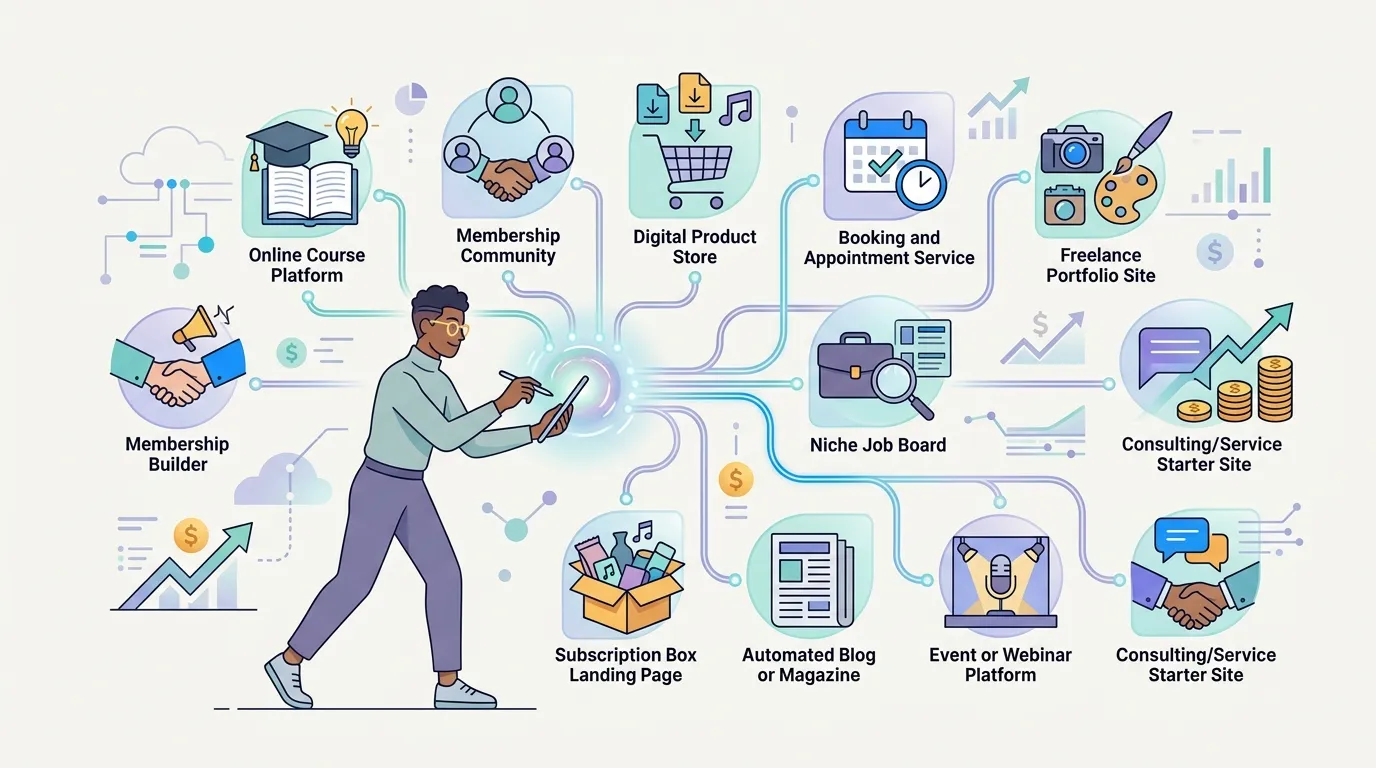
10 Profitable Websites You Can Build with FloopFloop Today
Discover ten revenue-generating website ideas you can launch in minutes using FloopFloop's AI-powered builder, complete with practical monetization strategies.

Build Web Games with AI: FloopFloop's No-Code Approach
Discover how to develop interactive web games without writing code, using AI-powered generation and instant deployment on modern infrastructure.
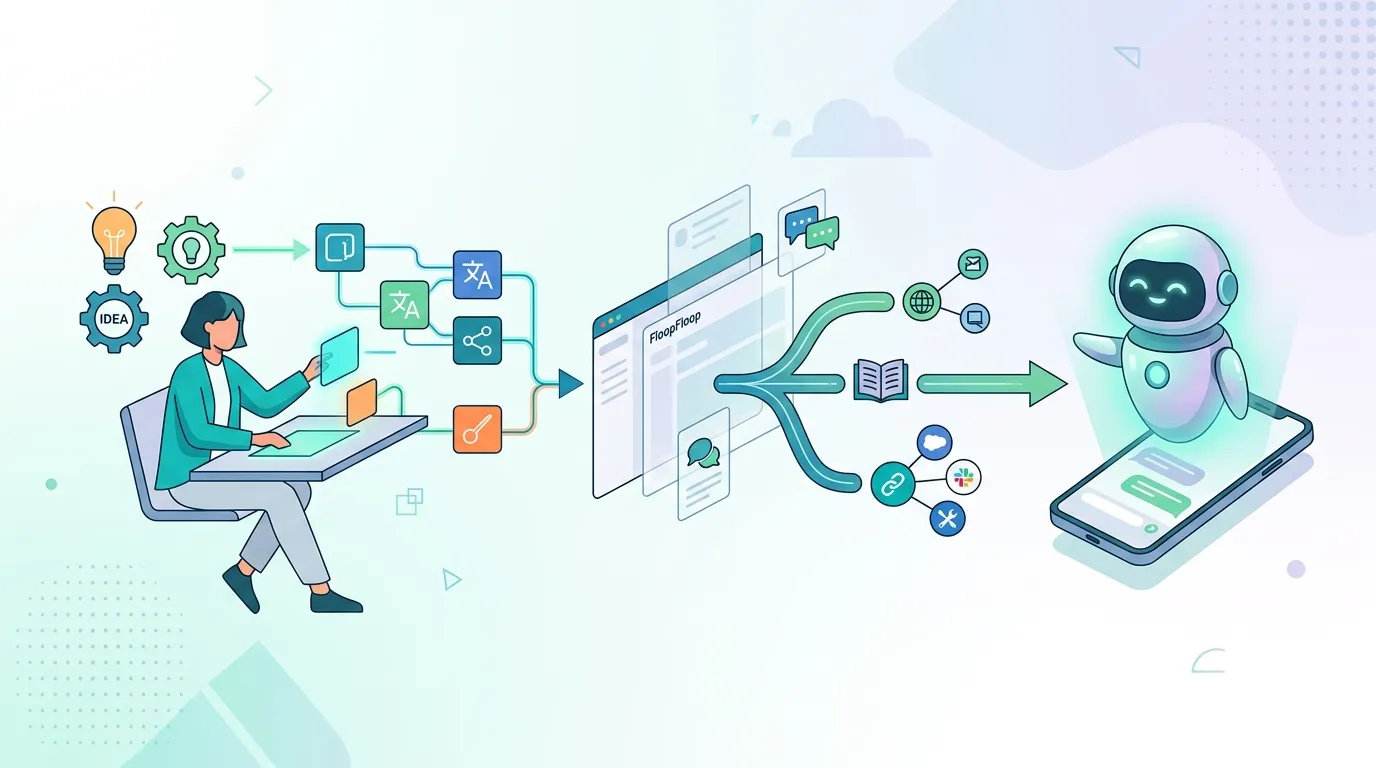
Create Custom AI Assistants with FloopFloop: Step-by-Step Guide
Learn how to build and deploy your own AI assistants in minutes using FloopFloop's AI-powered web app builder, from concept to live agent.